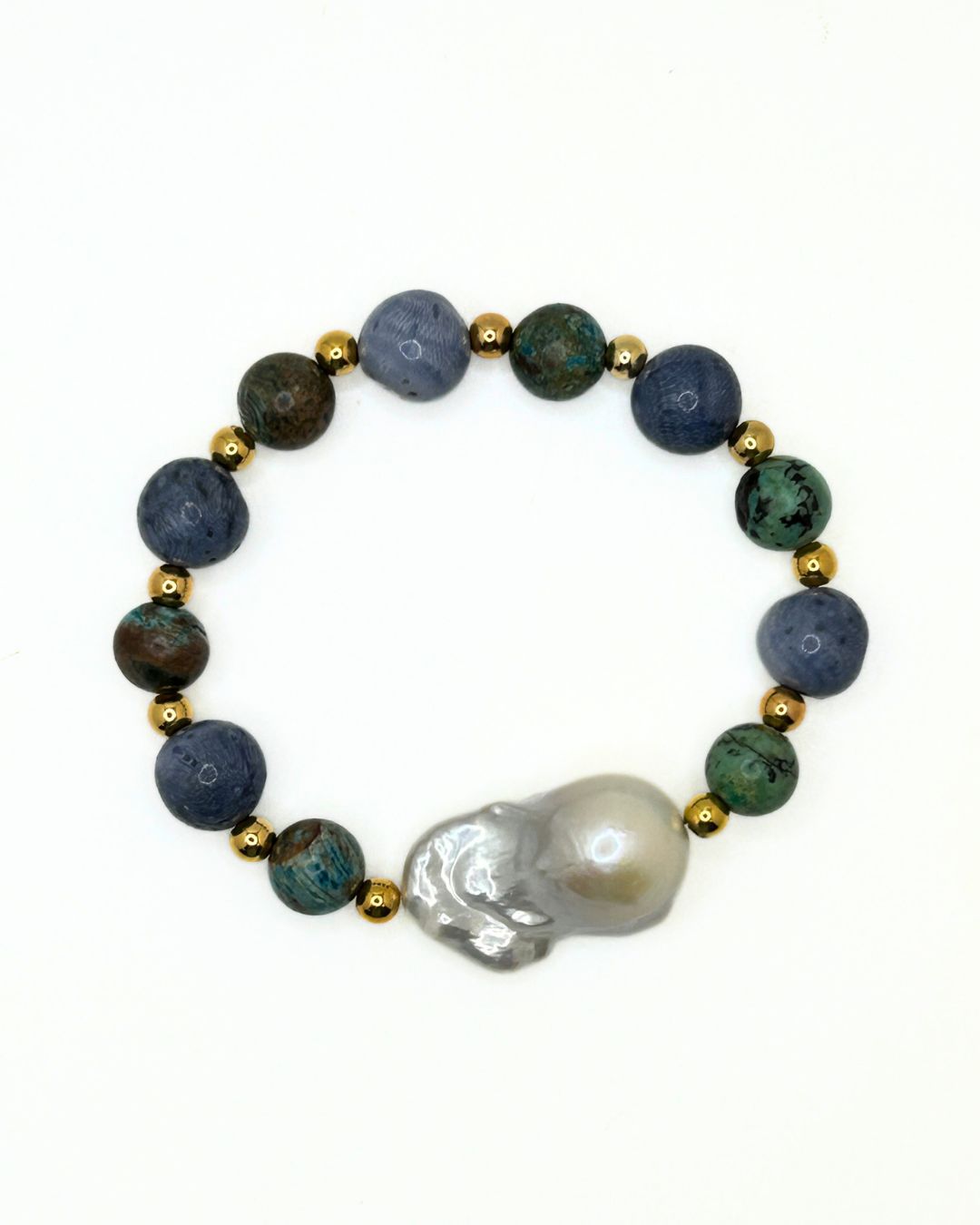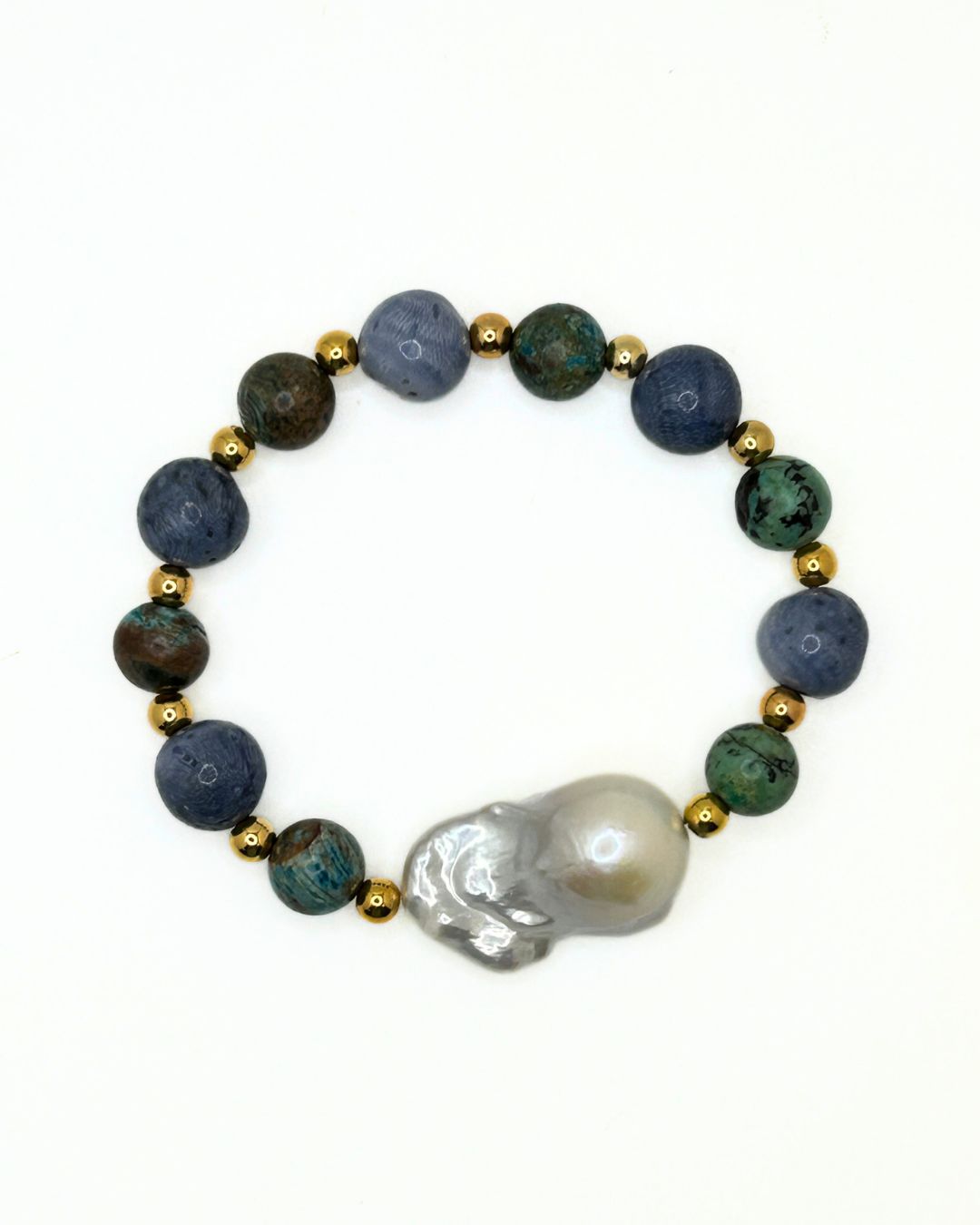
Here's a little secret the jewelry world doesn't always mention: African turquoise isn't turquoise.
It's a jasper, a member of the quartz family, found in Africa. Its mottled blue-green color and dark speckles reminded someone of turquoise, the nickname stuck, and now it's what everyone calls it. So I call it that too, but I want you to know exactly what you're getting.
How it compares to genuine turquoise
- Genuine turquoise is its own mineral, softer and more porous, in shades from sky blue to green.
- African turquoise is a jasper: harder (about 6.5 to 7 on the hardness scale), with earthy greens, blues and dark flecks that make every bead a little different.
- Turquoise-colored howlite is a white stone dyed to look like turquoise. That's a third thing entirely.
You'll find all three in my shop, each labeled as exactly what it is.

All three on one wrist: the Turquoise Wrap Bracelet mixes African turquoise, genuine turquoise and turquoise-colored howlite.
Is it dyed?
Sometimes. Some African turquoise keeps its natural color, and some is dyed to brighten or even out the blue. When I know a strand is dyed, I'll say so in the listing.
Why I love it anyway
Because it's beautiful, durable and full of personality. Those mottled greens and denim blues sit perfectly next to a baroque pearl or warm brass, and the jasper's hardness means it handles everyday wear. It just doesn't need to pretend to be something else.

Case in point: the Baroque Pearl & African Turquoise Bracelet.
How I label it
On my site, you'll see it as African turquoise (jasper), so the name you'd search for and the stone it really is sit side by side.
How to care for it
- Wipe it with a soft, dry cloth.
- Keep it away from harsh cleaners, and away from long soaks if it's dyed.
- Store it apart from softer stones and pearls so it doesn't scratch them.
Curious about a stone in one of my pieces? Email me at tammy@trandalljewelry.com and I'll tell you exactly what it is.