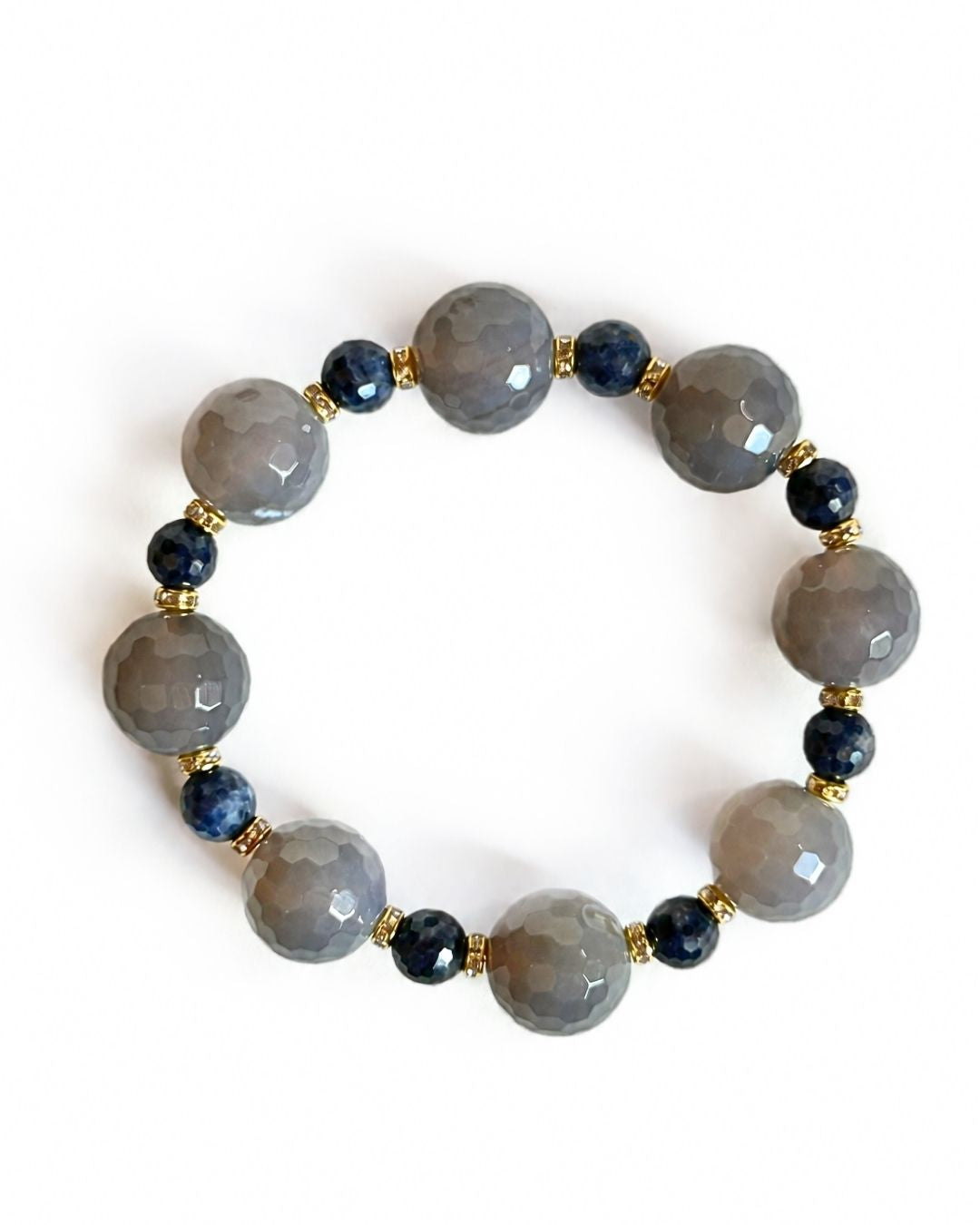
Every time I put "sponge coral" in a description, someone asks the same thing: wait, isn't coral protected? It's a good question, and I'd rather you ask it than wonder. The short answer: some coral is. Sponge coral isn't. Here's why.
Not all coral is the same coral
Precious coral is the deep red and pink coral you see in antique jewelry. It comes from a family of slow-growing corals (Corallidae), harvested mainly in the Mediterranean and the Western Pacific.
Sponge coral is a different animal entirely. It's Melithaea ochracea, a knotted fan coral that grows on shallow reefs in the South China Sea, between Taiwan and Indonesia. It gets the name "sponge" because its structure is porous, not because it's a sponge. It is real coral.
Why precious coral is in trouble
Precious coral has been harvested hard for a long time, and it doesn't bounce back quickly. According to TRAFFIC, the wildlife trade monitoring group:
- 30 to 50 metric tonnes of red and pink coral are harvested every year.
- Mediterranean red coral colonies once grew to 50 cm tall. In fished areas today, more than 90 percent measure just 3 to 5 cm, and fewer than half are old enough to reproduce.
- Populations off parts of the Italian, French and Spanish coasts are no longer worth fishing commercially.
The legal picture is more mixed than most people think. In 2010, CITES (the international treaty on trade in endangered species) voted down a proposal to put all red and pink corals under trade controls. Four species are listed under CITES Appendix III at China's request, which means their trade is monitored. Other corals, including black coral, blue coral and stony reef corals, are listed under Appendix II, so international trade in them needs permits.
Why sponge coral is different
- It grows much faster than the precious corals used in traditional coral jewelry.
- It isn't on the CITES lists. There's no international trade restriction on it.
- It's harvested in the South China Sea, and some is farmed.
I'll be honest about one thing: it is still a real animal from the sea. "Legal" and "not endangered" don't mean "no impact," and I won't call it something I can't back up. What I can tell you is exactly what it is.
What happens before it becomes a bead
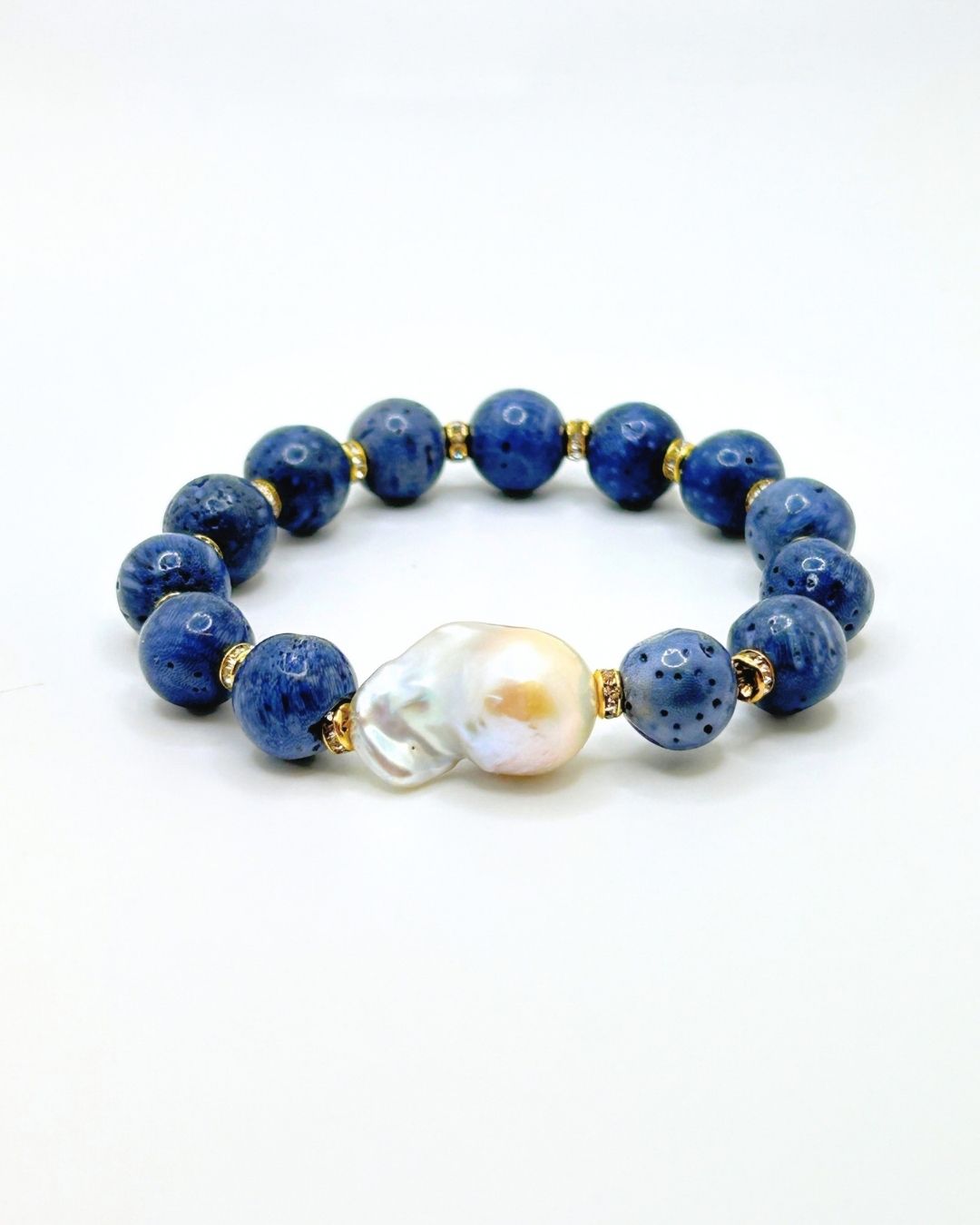
Sponge coral is soft and full of tiny holes, so most of it is filled with resin and polished before it's ever strung. Its natural color runs to orange-red, which means any blue sponge coral you see has been dyed. The blue sponge coral in my bracelets is dyed, and I say so.
How I label it
You'll see "dyed blue sponge coral" on every piece that uses it, like the Baroque Pearl & Blue Sponge Coral Bracelet and the Baroque Pearl & African Turquoise Bracelet. Real coral, honestly labeled. That's the deal.
Got a question about a material in one of my pieces? Ask me. I'd much rather tell you exactly what you're wearing.